
Active Warrants in St. Lucie County
Warrants in St. Lucie County are issued by judges of the Circuit Court and County Court as part of the Nineteenth Judicial Circuit. A judge signs an arrest warrant when law enforcement shows probable cause that a crime was committed and that the named person committed it. Bench warrants and capias orders come from the court itself when a party fails to appear, violates probation, or does not comply with a court order. Search warrants authorize entry into a premises and are typically not public until after they are executed.
The St. Lucie County Sheriff's Office is the primary local law-enforcement agency responsible for serving warrants in unincorporated areas and the county jail. Fort Pierce Police, Port St. Lucie Police, and other municipal agencies serve warrants within their jurisdictions. Florida does not maintain a centralized county-by-county active warrant list in one public location, but the Florida Department of Law Enforcement runs a statewide wanted-persons search at pas.fdle.state.fl.us that pulls from agency submissions across the state. That database is updated as agencies enter and close records, but it is not a real-time feed and not every local warrant is submitted statewide.
Online warrant data should be treated as a lead. A warrant can change status quickly. An agency may serve it, a judge may recall it, a bond may be set, or a clerical correction may alter the record. Always confirm with the issuing court or agency before acting on warrant information found online.
The image below shows the official St. Lucie County Sheriff's Office website, the starting point for local warrant and inmate information.
The St. Lucie County Sheriff's Office homepage provides direct access to inmate lookup, release reports, and agency contact information relevant to active warrants.
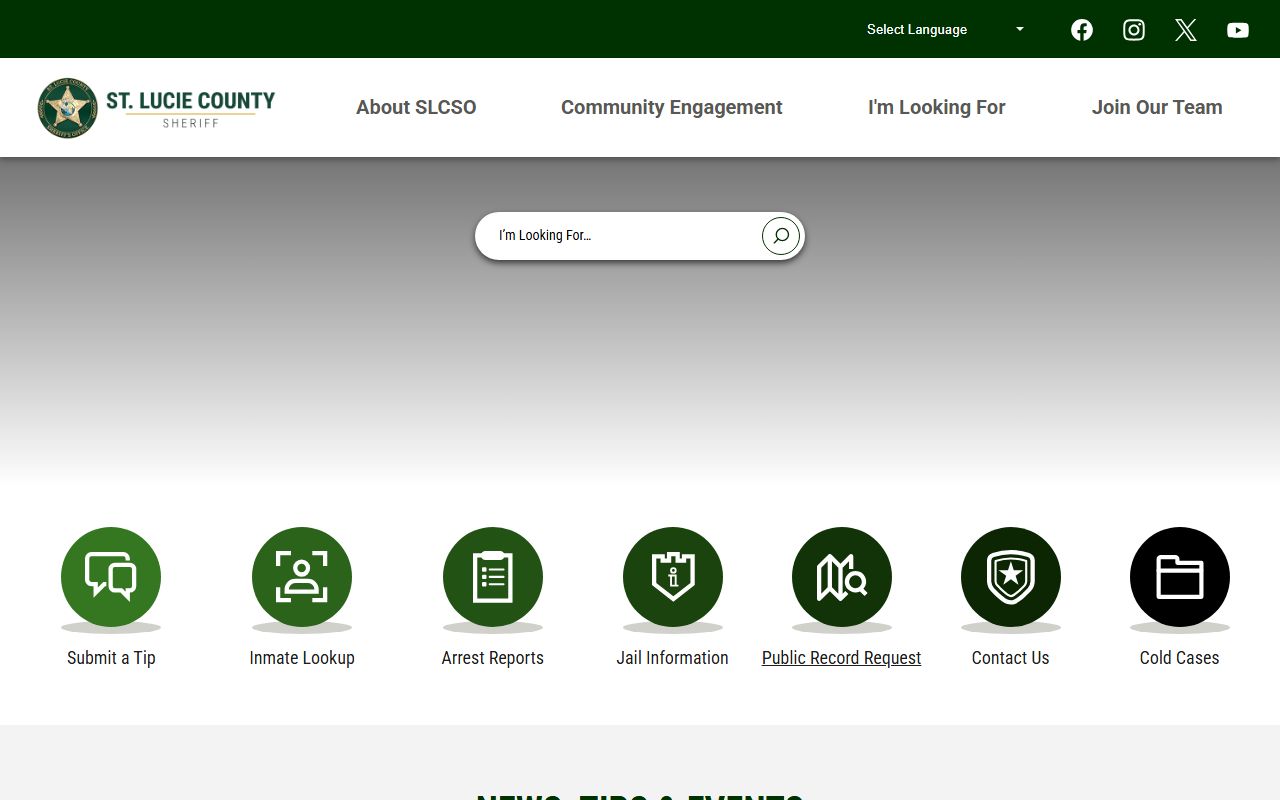
The Sheriff's site links to inmate custody records and agency contacts; call or visit for warrant confirmation beyond what appears online.
Note: A warrant entry in any online database confirms only that the record was submitted; it does not confirm the warrant is still active, unsatisfied, or enforceable today.
Types of Warrants in St. Lucie County
Florida courts and law enforcement use several distinct warrant types. Each has a different trigger, purpose, and outcome. Knowing the type helps a person or attorney figure out how to respond and which office to contact first.
- Arrest warrant - Issued by a judge after a finding of probable cause; authorizes law enforcement to arrest and detain the named person.
- Bench warrant / capias - Issued directly by the court when a defendant or witness fails to appear, misses a hearing, or violates a court order; often triggers immediate arrest upon contact with law enforcement.
- Search warrant - Authorizes officers to enter and search a specific location, vehicle, or person for evidence; these are generally sealed before execution and may not appear in public records until later.
- Capias pro fine - A Florida enforcement tool tied to unpaid fines or court costs; it compels a return to court and can result in arrest.
- Fugitive warrant - An out-of-county or out-of-state warrant that is forwarded to St. Lucie County for service; the originating jurisdiction must agree to extradite before the person is transported.
Bench warrants are among the most common warrant types seen in local court dockets. They often arise when a person with an open case simply stops showing up. Because bench warrants are entered into law-enforcement systems, a person can be stopped and arrested during a routine traffic stop or any other police encounter if a warrant is outstanding. Resolving a bench warrant quickly, usually through an attorney filing a motion to recall or by appearing before the judge, is almost always better than waiting for an arrest.
The screenshot below shows the Sheriff's inmate lookup page, where current custody records and warrant-related holds sometimes appear for persons already booked.
The Sheriff's Inmate Lookup page shows current custody, charges, and any holds or warrant flags for persons booked into the St. Lucie County Jail.
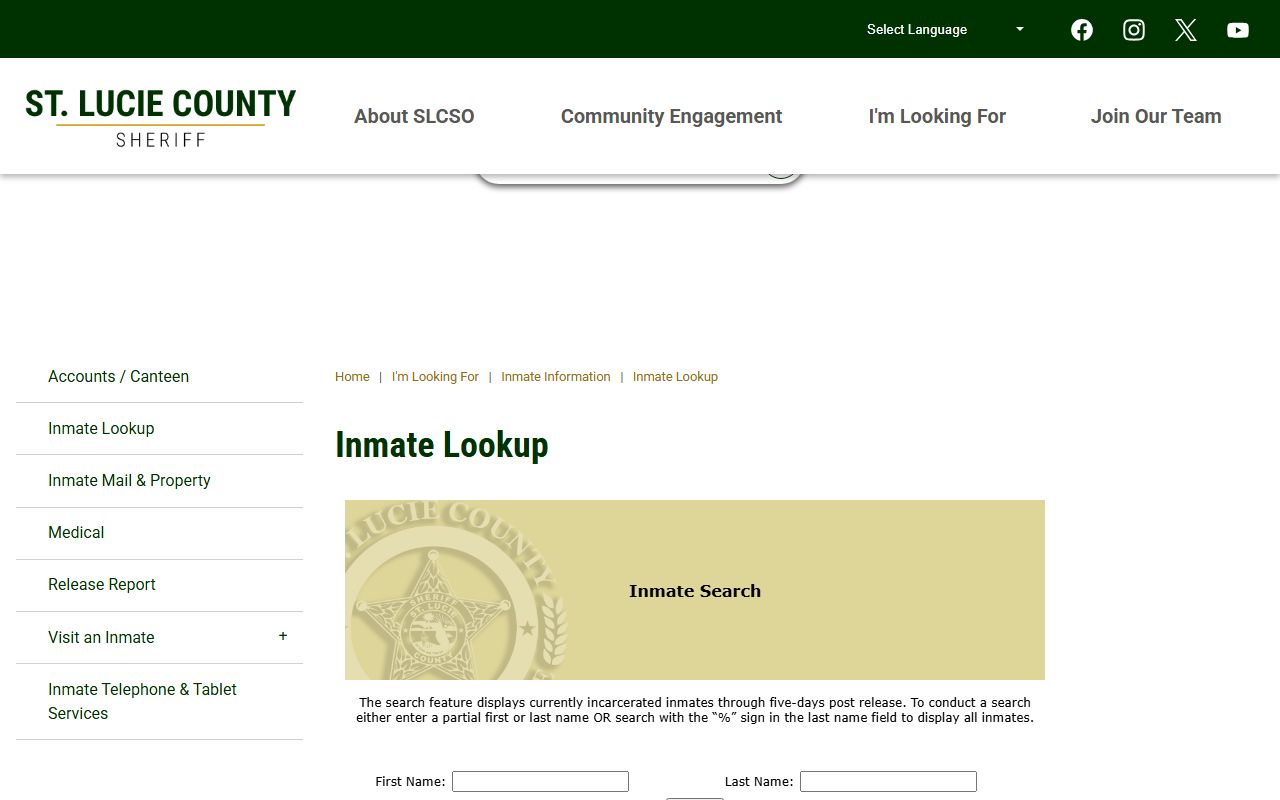
If a person with an active warrant has already been arrested, the inmate record may show the warrant number or the hold agency alongside the booking charges.
How to Search St. Lucie County Warrants
There are two main tools for a St. Lucie County warrant search: the FDLE statewide wanted-persons database and the Sheriff's inmate lookup. Neither is a complete county warrant list, but together they cover the largest share of publicly accessible warrant data. A third check through the Clerk's court case search can surface bench warrants entered on an open docket.
- Go to the FDLE Wanted Persons search. Enter the person's last name. Add a first name, middle name, sex, race, or date of birth to narrow results. Review each match carefully before drawing conclusions.
- Go to the St. Lucie County Sheriff's Inmate Lookup. Search by last name or first name. If the person is currently booked, the record may show warrant-related charges, holds, or flagged warrants attached to the booking.
- Go to the Clerk's court case search portal. Search by party name or case number. Look for capias or bench warrant entries on the docket, which may not appear in law-enforcement databases at the same time.
- Call the issuing court or law-enforcement agency to confirm. Online results reflect the last database update, not necessarily current status.
- If the warrant may apply to you, contact a criminal defense attorney before approaching any court or agency. An attorney can check warrant status through official channels and advise on the best way to resolve it.
The release report page, shown below, helps identify persons recently released from the St. Lucie County Jail after a warrant arrest or after bond was posted. Cross-referencing with the inmate lookup can confirm current versus past custody.
The Sheriff's Release Report page lists recently released individuals from St. Lucie County custody, which may include persons held on warrant arrests.
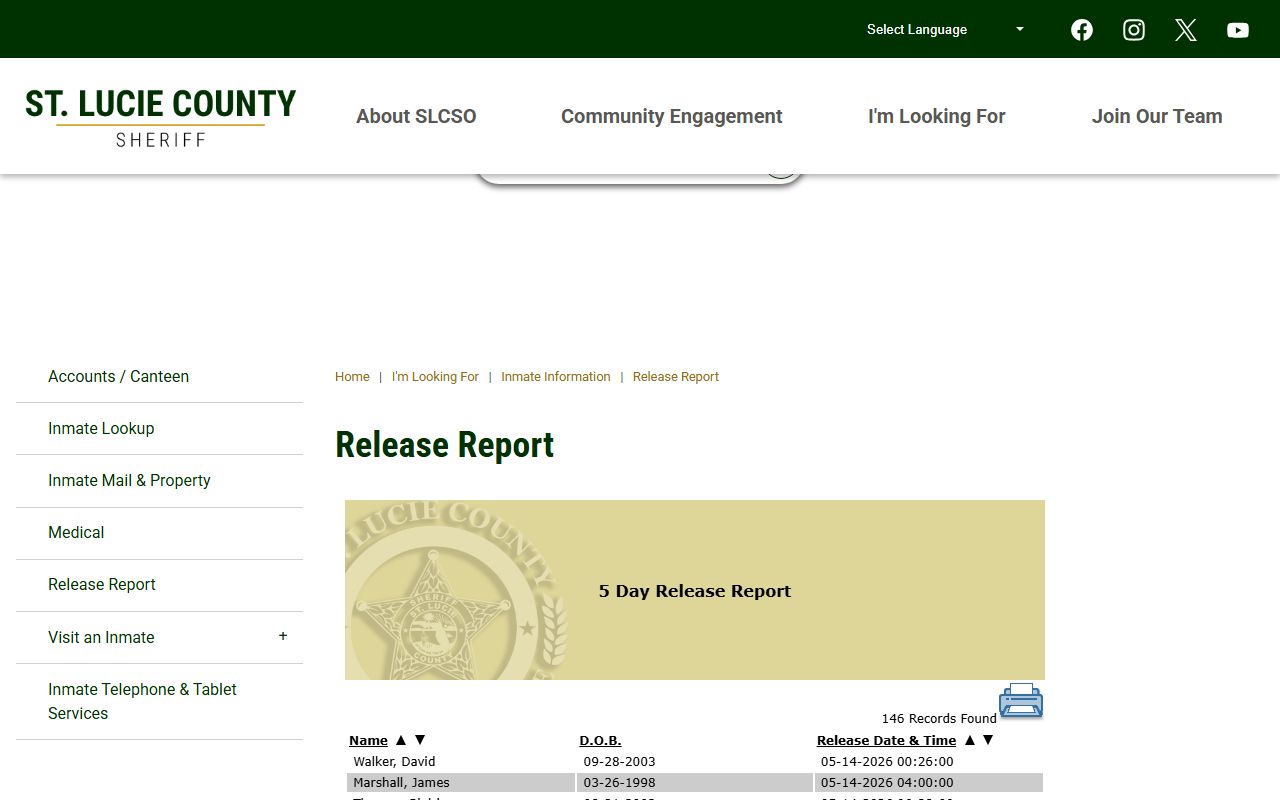
A person appearing on the release report has already been processed and released; check the Clerk's docket for whether an open warrant or hold remains on the case.
St. Lucie County Warrant Search Fields
The FDLE wanted-persons portal uses a set of optional fields to narrow or broaden a search. No single field is strictly required, but more specific input reduces false matches. The table below shows the fields available in the FDLE system as documented in the research for this site.
| Field Label | Type | Required | Notes |
|---|---|---|---|
| Last Name | Text | Optional | Most useful single field for name-based searches. |
| First Name | Text | Optional | Narrows results when a last name is common. |
| Middle Name | Text | Optional | Helps distinguish people with identical first and last names. |
| Race | Dropdown | Optional | Uses state-defined race codes as submitted by the agency. |
| Sex | Dropdown | Optional | State-defined options; helps narrow common names. |
| Date of Birth / Age | Date / Text | Optional | Adding a DOB reduces mistaken identity risk significantly. |
| Search | Button | n/a | Runs the query against the FDLE wanted-persons database. |
| Reset | Button | n/a | Clears all fields so a new search can be entered. |
The Sheriff's inmate lookup uses similar but slightly different fields, including a booking number field that can find an exact record when the identifier is already known. If you are searching for a person who may have been arrested on a warrant rather than just flagged as wanted, the inmate lookup is often the better first stop for St. Lucie County specifically.
The visitation information page, shown below, is a useful reference for family members who want to confirm that a person in custody on a warrant arrest is accessible at the jail.
The St. Lucie County Sheriff jail visitation page covers rules, scheduling, and procedures for visiting someone held at the county detention facility.
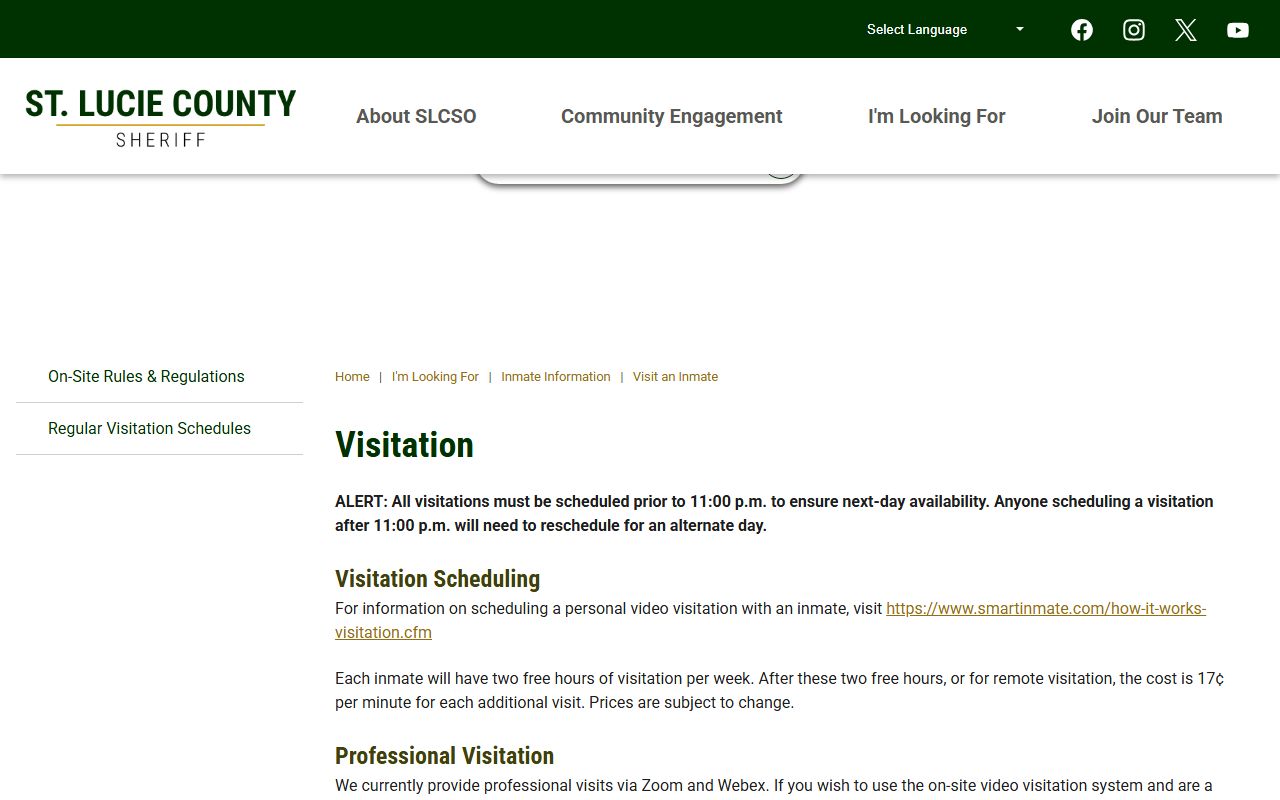
Visitation access is typically set after booking and classification; a person arrested on a warrant may have a hold that affects visitation or bond eligibility until a judge reviews the case.
Note: FDLE wanted-person records are submitted by the reporting agency; not every local warrant is submitted to FDLE, so a negative result does not rule out an active local warrant in St. Lucie County.
What a St. Lucie County Warrant Record Shows
When a warrant record appears in the FDLE wanted-persons database, it typically includes identifying and charge information submitted by the agency at the time of entry. The actual court warrant document may contain more detail, but the public database shows a subset of those fields. The table below shows the common fields from the FDLE sample warrant-record inventory.
| Field | What It Shows |
|---|---|
| Name and aliases | Full legal name plus known aliases or alternate names used by the subject. |
| Date of birth or age | Helps confirm identity and avoid mistaken matches with others sharing the same name. |
| Sex and race descriptors | Physical identifiers as entered by the reporting agency. |
| Physical descriptors | Height, weight, hair color, eye color, and distinguishing marks if submitted. |
| Wanted agency | The law-enforcement agency that entered the warrant, such as a county sheriff or municipal police department. |
| Warrant number or case number | The identifier assigned by the issuing court or agency, if displayed in the public record. |
| Offense / charge | The criminal charge or statute violation that led to the warrant being issued. |
| Caution or extradition notes | Flags for officer safety concerns or whether the agency will extradite from other states, if displayed. |
| Last known address or county | Location information submitted by the agency, if made public in the record. |
| Contact instruction | Direction to contact the law-enforcement agency; records always include a note not to attempt apprehension. |
The FDLE criminal history database, shown below, is a separate tool from the wanted-persons search. It covers past arrests and convictions, not just open warrants. The two systems serve different purposes and should not be confused with each other.
The FDLE criminal history record information page explains how to request a Florida criminal history check, which is distinct from a warrant search but relevant for a full background review.
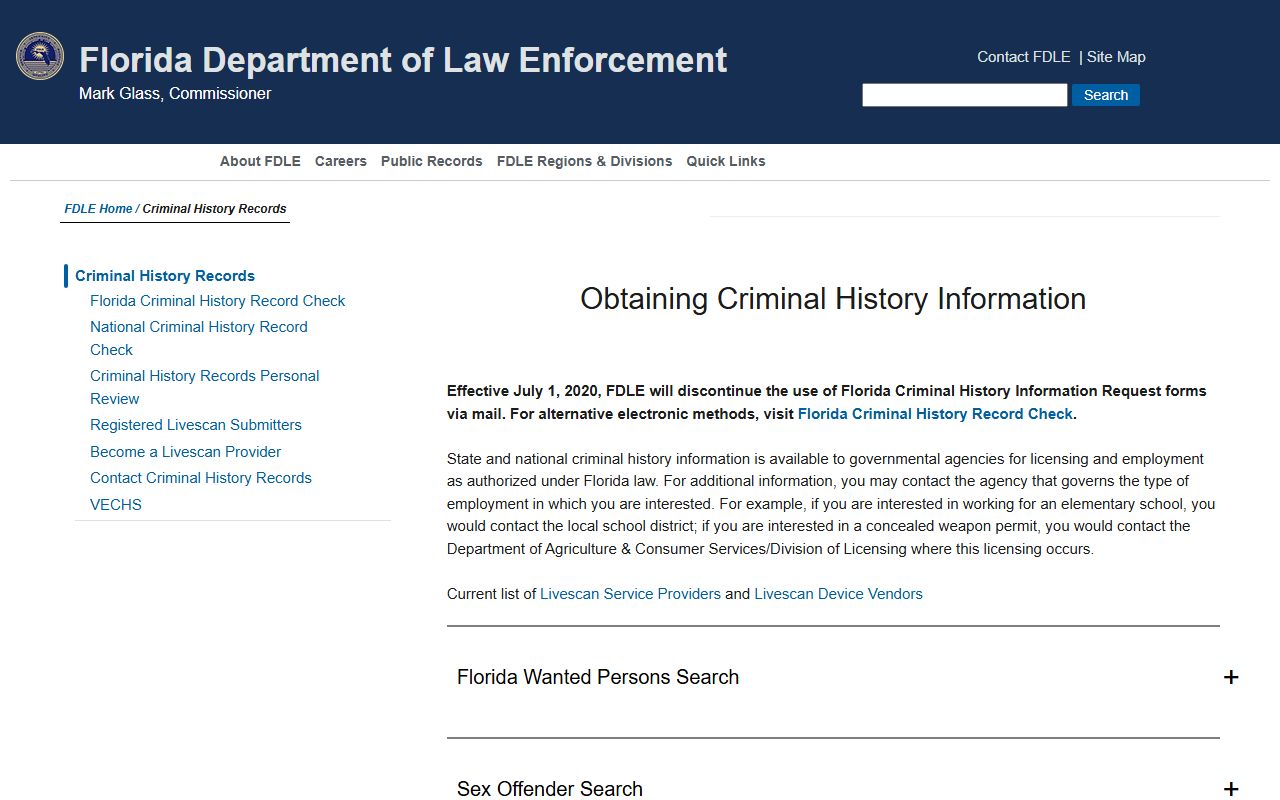
A criminal history result from FDLE shows past arrests and dispositions statewide; a warrant search shows only currently open wanted-person entries submitted by an agency.
What to Do If You Have an Outstanding Warrant
An outstanding warrant does not get resolved on its own. The longer it sits, the more risk a person faces of being arrested at a traffic stop, a courthouse visit, or any routine police encounter. The steps below reflect the general process for addressing a warrant in Florida courts, including the Nineteenth Judicial Circuit where St. Lucie County sits.
- Verify the warrant is real. Use FDLE wanted persons, the Clerk's case search portal, and confirm with the issuing agency or court.
- Contact a criminal defense attorney before doing anything else. An attorney can check warrant status through official channels, advise whether to surrender or file a motion, and appear with you in court.
- Ask the attorney whether a motion to recall or quash is appropriate. For bench warrants, especially older ones or those based on a missed hearing, a motion to recall filed with the issuing court can sometimes resolve the warrant before any arrest.
- If surrender is the right path, confirm the bond status first. Some warrants have a set bond; others require a judge to set one at first appearance. Arrange transportation and someone to post bond if needed.
- Bring valid government identification and any relevant court paperwork when you appear. The court or jail will confirm identity at intake.
- Check whether any other holds exist. A warrant from another jurisdiction or a probation hold can block release even if the primary warrant bond is paid.
- After the warrant is resolved, confirm the court docket and law-enforcement systems have been updated. It can take days for a recalled or served warrant to clear all databases.
Important: Consult a criminal defense attorney before surrendering on any warrant; bond, hold, and extradition status can affect your release and freedom of movement significantly.
Bond on a warrant arrest works the same way as any other arrest in Florida. The amount may be preset by a bond schedule or set by the judge at first appearance. Surety bonds, cash bonds, and release on recognizance are all possible depending on the offense, the person's history, and the judge's order. Do not rely solely on an online bond amount; confirm the active bond status with the jail before making any payment arrangements.
Note: Warrants from other counties or states can follow a person into St. Lucie County; a St. Lucie arrest check will flag out-of-jurisdiction holds, and the other agency must agree to extradite before transfer can occur.
FDLE and Statewide Warrant Resources
The Florida Department of Law Enforcement is the state agency most relevant to a broad Florida warrant search. FDLE runs the statewide wanted-persons database at pas.fdle.state.fl.us, the public criminal history search at cchinet.fdle.state.fl.us, and the sex offender and predator registry at offender.fdle.state.fl.us. These are three separate databases. A person can appear on one without appearing on another.
The wanted-persons search pulls from agency submissions. If a St. Lucie agency entered a warrant, it will appear there if the agency complied with reporting rules. If the warrant is local only and was not submitted statewide, it may not appear in FDLE results. This is one reason to always check the Clerk's court case search as well, since bench warrants and capias orders appear on the court docket whether or not they were submitted to a law-enforcement database.
The FDLE sex offender and predator registry, shown below, is a statewide resource often checked alongside warrant searches when reviewing a person's legal history. It is a separate record from warrants but frequently searched together.
The FDLE sexual offender and predator search is Florida's official registry for persons required to register under state sex-offender law, searchable by name, county, or zip code.
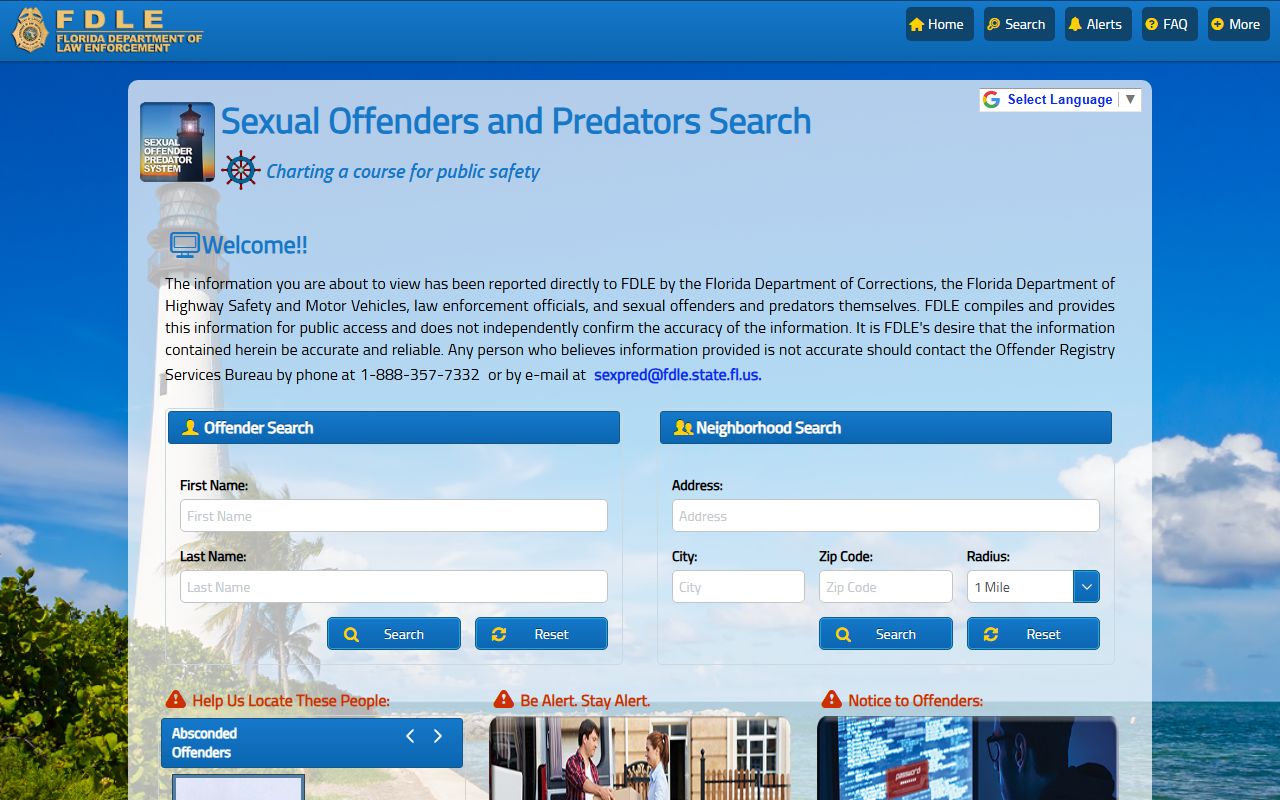
The sex offender registry and the wanted-persons search are distinct FDLE tools; a registrant may or may not have an active warrant, and those records must be checked separately.
St. Lucie County Sheriff's Office Contact
The St. Lucie County Sheriff's Office is the primary local contact for warrant inquiries, inmate information, and law-enforcement matters in unincorporated St. Lucie County and the county jail. The Sheriff's Office serves warrants, books arrested persons into the county jail, and maintains the public inmate and release databases. The official site is the best source for current contact details, as phone numbers and service hours can change.
St. Lucie County Sheriff's Office
stluciesheriff.com
For warrant-specific inquiries, the Sheriff's Office or the Clerk of the Circuit Court and Comptroller are the two offices most likely to have direct answers. The Clerk's contact page at stlucieclerk.gov/contact-us lists current phone numbers, locations, and hours for the clerk's service offices at 201 South Indian River Drive, Fort Pierce, FL 34950 and the St. Lucie West branch.
If the warrant was issued by a municipal court or involves a city police department, that agency is the correct contact for warrant status and surrender procedures. Fort Pierce Police and Port St. Lucie Police maintain their own warrant and arrest records for cases within their jurisdictions.
Restricted St. Lucie County Warrant Records
Not all warrants are publicly accessible. Several categories of warrants are sealed or restricted under Florida law, and their existence may not appear in any public database.
Search warrants are typically sealed before and during execution. Once executed, the warrant and supporting affidavit may become part of a court record, but they are not always available immediately. A judge can order continued sealing when disclosure would harm an ongoing investigation, a witness, or a victim. Florida Rule of General Practice and Judicial Administration 2.420 and Florida Statutes section 119.0714 govern court-record access and exemptions, including records that are confidential by order or statute.
Juvenile warrants are confidential under Florida law. Records involving persons under 18 in delinquency proceedings are protected under Florida Statutes section 985.04. These records will not appear in public databases and are not accessible to the general public. The same protection applies to dependency cases under section 39.0132.
Mental health-related civil commitment proceedings and warrants associated with them are also confidential under section 394.4615. Sealed and expunged records are handled under section 943.0585 and section 943.059; a person who has had a record sealed or expunged under these statutes may lawfully deny the existence of the underlying case in most contexts. Federal warrants issued by the U.S. District Court for the Southern District of Florida are separate from state records and are not found in FDLE or the Clerk's public database.
Note: A record not appearing in any public search does not confirm a clean record; sealed, juvenile, and federal records are legitimate warrant types that do not show up in standard public searches.