
St. Lucie County Jail Roster Overview
The St. Lucie County Sheriff's Office inmate information page is the official starting point for jail custody data. The Sheriff's Office runs the county detention facility and maintains the public-facing roster. The inmate lookup portal lets you search by name or booking number and view real-time custody records. The system reflects bookings that have been processed through intake, so a person arrested in the early hours may not appear until fingerprinting, charge entry, and system updates are complete. Roster data can update multiple times each day as new bookings come in and releases are processed.
The St. Lucie County jail roster only shows people held in the county detention facility. It does not show people who have been transferred to Florida state prison, held in a federal Bureau of Prisons facility, held by U.S. Immigration and Customs Enforcement, or booked into another county's jail. If a search returns no result, the person may be in state or federal custody rather than local custody. See the released inmates page for guidance on searching Florida DOC and federal BOP databases when a local search comes up empty.
The roster is public under Florida law. Bond amounts, charges, and booking dates are generally public information. Some fields are redacted: medical details, mental health records, protective custody status, security classification, and victim information are not shown. Juvenile booking information is also restricted.
How to Use the St. Lucie County Inmate Roster
The public inmate lookup is free and requires no account or registration. Go directly to the Sheriff's inmate lookup page and enter the search fields described below. Results load from the live custody database. If you find a listing, click the name or record link to view the full inmate profile, which includes charges, bond details, and any court date on file.
- Open the roster portal. Go to stluciesheriff.com/215/Inmate-Lookup. The page is public and loads in any standard browser with no login required.
- Enter a last name. Type the person's last name in the Last Name field. Last name is the most reliable starting point. Partial last names may work but can return a long list of results.
- Add a first name or booking number if you have one. A first name narrows the results when multiple people share a common last name. If you have the booking number from an arrest record or court filing, enter it for a direct match.
- Run the search and review results. Click the Search button. The system returns a list of matching custody records. Check the name spelling and booking date before clicking through, since common names can produce multiple results.
- Open the full inmate profile. Click the name or record link to view the detailed profile. This screen shows charges, bond amounts, arresting agency, demographics, and any scheduled court date. Write down the booking number, it is the most reliable identifier for follow-up calls to the jail or Clerk's office.
- Confirm with the jail if needed. Bond status, release conditions, and court dates can change after a page loads. For critical matters, check the Clerk's case docket or contact the Sheriff's Office directly to confirm current status.
Note: A person who does not appear in search results may have been released, transferred, or not yet fully processed through intake. Use the Sheriff's release report and the released inmates resources to check those scenarios.
Roster Search Fields, St. Lucie Sheriff
The inmate lookup portal accepts several search inputs. You do not need to fill every field. Last name alone is often enough to get started. The table below shows each field available on the public search form.
| Field Label | Type | Required | Notes |
|---|---|---|---|
| Last Name | Text | Optional / conditional | Most useful public search input. Start here for name-based searches. |
| First Name | Text | Optional | Narrows results when a last name is common. Use with last name for best results. |
| Booking Number | Text | Optional | Exact booking identifier assigned at intake. Use this if you already have it from an arrest report or court filing. |
| Date of Birth | Date | Optional | May not be exposed in all public views. Use to resolve multiple results with the same name. |
| Search (button) | Button | n/a | Submits the query and loads matching custody records from the live system. |
| Reset / Clear (button) | Button | n/a | Clears all entered fields so you can start a new search without refreshing the page. |
What a St. Lucie Inmate Profile Shows
Each inmate profile in the St. Lucie County roster pulls from the jail management system and shows a set of standardized fields. Not every field appears on every record. Some fields are withheld for security or legal reasons. The table below describes the fields typically shown on a public custody record through the Sheriff's lookup portal.
| Field | What It Shows |
|---|---|
| Full Name | The inmate's legal name as entered at booking. Spelling follows the booking documentation, which may differ from a court filing if a name was entered differently. |
| Booking Number | A unique jail identifier assigned at intake. Every booking event gets its own number, so a person with multiple arrests will have multiple booking numbers. |
| Booking Date and Time | The date and time the person was checked into the jail system after arrest. This is distinct from the arrest date, which can be earlier. |
| Mugshot | A booking photograph may be shown depending on system settings and Florida public records rules. Not all facilities publish mugshots in the public view. |
| Demographics | Age, sex, race, height, weight, and hair and eye color may appear. This information helps confirm you have the right person when names are common. |
| Arresting Agency | The law enforcement agency that made the arrest, such as the St. Lucie County Sheriff's Office, a city police department, or a state agency. |
| Charges | Charge descriptions, Florida statute numbers, degree or classification (felony, misdemeanor), and the count for each charge. Charges shown are what was entered at booking and may differ from what is formally filed by the State Attorney. |
| Bond Amount | The bond set for each charge. May show cash amount, surety bond, recognizance release, conditional release, or no-bond status. Bond can be modified by a judge at first appearance or later hearings. |
| Housing Unit | Facility or housing location within the jail. Detailed cell or unit information may be limited or withheld for security reasons. |
| Court Date | A scheduled court appearance date, if one has been entered and is public. First appearance typically happens within 24 hours of booking under Florida law. |
| Release Date | Shown if the person has been released or if a projected release date is on record. A blank field means the person is likely still in custody, but confirm with the jail. |
| Holds or Warrants | A hold from another agency or an active warrant number may appear if that information is public. A hold can block release even when bond on one charge has been posted. |
Fields that are not shown include medical records, mental health status, protective custody flags, security classification notes, victim information, and any confidential case materials. Those records are not public regardless of the request method.
St. Lucie County Jail Facility
The St. Lucie County Sheriff's Office operates the county detention facility. This is where people booked on local arrests are held pending first appearance, bond, or court-ordered release. The facility holds pretrial defendants, sentenced misdemeanants, probation violators, and people held on warrants. Some inmates may also be held under agreements with other agencies pending transport. Exact capacity figures were not published in the official sources reviewed for this page, verify current capacity through the Sheriff's annual report or county budget documents.
St. Lucie County Sheriff's Office, Inmate Information
Inmate Lookup Portal
The Sheriff's inmate information page is the authoritative source for the current facility address, phone numbers by division, and any posted hours for the public window or bond processing area. Do not rely on addresses printed in older documents, use the official page at the time of your visit.
Booking Process in St. Lucie County
When someone is arrested in St. Lucie County, they go through a standard intake process before appearing in the public roster. The steps below reflect the general booking procedure at the county jail under Florida criminal procedure. The timeline from arrest to appearance in the online system can range from a few hours to longer, depending on workload, medical processing, and data entry timing.
The process starts with arrest or voluntary surrender, followed by transport to the jail and identity confirmation. Staff run a warrant check at intake to identify any outstanding holds from other agencies. Personal property is inventoried and stored. Then comes the booking photograph and fingerprinting, which feeds into state and national criminal identity databases. A medical and classification screening follows, this step determines housing needs and flags any mental health or medical issues. Charge information is entered, and an initial bond review is conducted based on the offense type and any judicial standing orders for standard bond amounts. Finally, the inmate receives a housing assignment, or is released if bond is posted before formal housing begins.
Florida law requires a first appearance hearing within 24 hours of arrest. At first appearance, a judge reviews the arrest, advises the defendant of their rights, and sets or reviews bond. The court can modify the initial bond amount, impose conditions of release, or order no bond for serious offenses. Bond can be cash, surety (through a licensed bondsman), release on recognizance, or conditional release depending on the charge and judicial order. Always confirm the active bond status with the jail directly, warrants, holds from other agencies, or a judicial no-bond order can block release even when a dollar amount appears on the roster.
Why a Person May Not Appear in Search Results
A blank result does not always mean the person was never arrested. There are several reasons why someone might not show up in the St. Lucie County inmate lookup.
- Still being processed. Intake takes time. A person arrested in the past few hours may not yet be entered in the live system.
- Already released. Bond was posted, a judge ordered release, or the person was released on recognizance and is no longer in custody. Check the Sheriff's release report or the released inmates resources.
- Transferred to state prison. If the person received a sentence, they may have been transported to a Florida DOC facility. Search Florida DOC at dc.state.fl.us.
- In federal custody. Federal arrests or immigration holds route to federal facilities not reflected in the county roster. Use the Bureau of Prisons locator at bop.gov for those searches.
- Held in another county. If the arrest happened elsewhere, the person is booked in that county's jail, not St. Lucie.
- Name spelling difference. Try alternate spellings or just a partial last name to catch data-entry variations.
Visiting an Inmate at St. Lucie County Jail
The St. Lucie County Sheriff's Office publishes current visitation details on the Visit an Inmate page and the On-Site Rules and Regulations page. Visit schedules, remote video options, and any temporary restrictions change over time. Check those pages before you travel. The points below summarize the general rules that apply at most county jails in Florida, use them as a checklist, not a replacement for the official current rules.
Scheduling requirements and visit windows are set by the jail based on housing unit and inmate classification. In-person visits at secured facilities typically require advance scheduling, and walk-up visits may not be available. Remote video visits, if offered, are managed through a third-party vendor and require you to set up an account and pay per-session fees. The Sheriff's visit page identifies the current vendor and setup process.
The following rules apply to on-site visits at the St. Lucie County facility. Violations can result in denial of entry and removal from the approved visitor list. Review the full on-site rules before your visit.
- Government-issued ID. Visitors must present valid government-issued photo identification. Expired ID is typically not accepted.
- Dress code. Clothing that resembles inmate attire, is revealing, or is otherwise prohibited by posted rules can result in denial. Check the dress code on the Sheriff's site before arriving.
- Children and minors. Minors usually require adult supervision. Relationship and guardian documentation may be needed. Confirm the current minor visitation rules with the facility.
- Visit length. Visit durations are set by the jail and can vary by housing unit. Visits can be cut short if the facility goes into lockdown or an emergency occurs.
- Approved visitor list. Many facilities require visitors to be on an approved list linked to the inmate's file. Ask the inmate to add your name through the facility process before your first visit.
Attorney visitation operates under different rules. Attorneys should bring bar identification, confirm access procedures with the facility in advance, and use the professional visitation process. Attorney-client visits are not subject to the same limits as social visits but still require security screening.
Mail Rules for St. Lucie County Inmates
The Sheriff's mail page publishes the current mailing address format, approved mail types, and prohibited items. Use the exact format the page specifies, typically the inmate's full legal name and booking number. Using the wrong format can result in mail being returned or discarded.
All personal mail entering the jail is subject to inspection. The facility can reject, return, hold, or scan incoming mail based on content, prohibited items, or security concerns. Legal mail from attorneys is handled under different procedures, it may be opened and inspected in the presence of the inmate rather than read by staff, but the exact procedure depends on current facility policy.
Items that cannot be sent include cash, stamps, Polaroid photos, explicit material, and anything on the facility's prohibited list. Do not attempt to send food, medications, or items that belong on the commissary, those go through the official commissary system, not through mail. Check the official mail page for the current prohibited items list before sending anything.
The image below is from the Sheriff's inmate accounts and money page, which covers how to send money, use kiosks, and manage commissary funds for people in St. Lucie County custody.
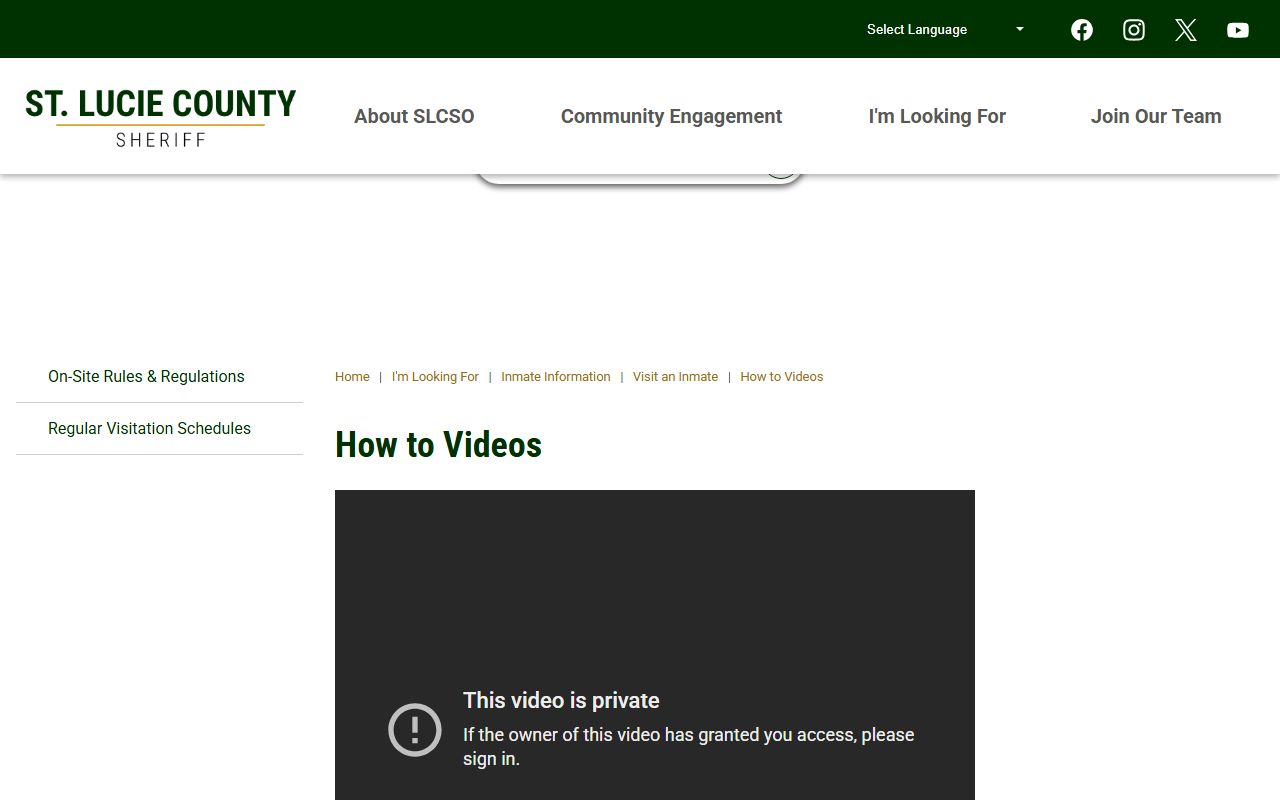
The inmate accounts page details vendor-specific steps for depositing money, including online, phone, kiosk, and mail-money options, along with any fees that apply to each method.
Commissary and Inmate Accounts in St. Lucie County
Inmates in St. Lucie County can receive money through the inmate accounts system managed by the Sheriff's Office. These funds are used for commissary purchases, phone calls, video visits if available, and other authorized services. The process and vendor are detailed on the inmate accounts page at the Sheriff's website.
Money sent to an inmate goes through a managed account, not directly to the person. Deposits can typically be made online, by phone, at a lobby kiosk, or by mail depending on what the current vendor supports. Each method may carry a service fee. Posting times vary, online deposits are often credited faster than mail money orders. Commissary funds and bond payments are separate. A deposit to the inmate's account does not apply toward bond. Bond payments follow a different process through the jail's bond window.
Phone calls from the jail go through a vendor-managed phone system. Calls are subject to monitoring and recording except for privileged attorney-client communications. If the facility offers tablet or video services, those run through a vendor account with per-session or per-minute fees. Inmates cannot receive incoming calls from outside the facility.
Note: Refund rules for unused commissary balances at release vary by vendor and facility policy. Check the official inmate accounts page for the current terms before sending large sums.
Charges, Holds, and Active Warrants
The charges shown on a St. Lucie County inmate profile reflect what was entered into the booking system at intake. These are not final convictions. They are the offenses alleged at the time of arrest. The State Attorney's Office reviews the case and decides what formal charges to file, which may be different from what appears in the jail roster. To see formal charges as filed, search the Clerk of the Circuit Court's case portal.
A hold is an instruction from another agency to keep the inmate in custody even if local bond is met. Common holds include immigration detainers from federal authorities, warrants from other Florida counties, outstanding charges in other states, or probation and parole violation warrants. A person with a hold may post bond on one charge but remain in jail because the holding agency has not released the hold. The inmate lookup may show a hold agency name or warrant number if that information is public.
Active warrants connected to a person in custody will also appear on the profile if they are public. For standalone warrant searches not tied to a current booking, use the warrant records resources, which include the FDLE wanted persons search and local confirmation steps. For the underlying criminal case records tied to any booking, search through the arrest and criminal records page.
Privacy Limits in St. Lucie County Jail Records
Florida's public records law makes most booking information public. Names, charges, bond amounts, booking dates, and arresting agency data are generally available to anyone who asks. However, certain records at the jail are exempt from public disclosure by state law.
Medical and mental health records are not public. Protective custody assignments and security classification details are withheld because releasing them could endanger the inmate. Victim information, including victim addresses and contact details tied to a case, is shielded under Florida law. Confidential informant information and ongoing investigative materials are also exempt. Juvenile records are restricted and are not shown in the public-facing adult jail roster system.
Mugshots occupy a gray area. Florida allows mugshot publication, but use of booking photos for commercial purposes, particularly by aggregator sites that charge for removal, has been subject to legislative scrutiny. The Sheriff's Office publishes booking photos as part of the official public record. Any third-party site that aggregates and sells access to those photos operates independently of the county and is not an official government source.
The image below is captured from the U.S. Bankruptcy Court for the Southern District of Florida website, which covers federal bankruptcy cases filed by St. Lucie County residents that are separate from the county jail and criminal records system.
Federal court proceedings, including bankruptcy cases, are handled entirely outside the county jail system and appear only in federal PACER records, not in the St. Lucie County inmate roster.
Attorney and Family Verification Steps
Family members and attorneys often need to confirm more than what the public roster shows. The online profile is a starting point, not a complete picture of a person's legal situation. Here are the key steps to take after finding someone in the inmate lookup.
For family members, the booking number from the roster is the most useful piece of information to have before calling the jail. Staff can confirm custody status, general housing location, and the bond amount faster when you have the booking number ready. The inmate information page identifies the correct phone line or division to contact. For case details beyond what the jail holds, such as formal charges, court dates, and docket entries, use the St. Lucie County Clerk of the Circuit Court case portal, which is maintained by Clerk Michelle R. Miller's office.
For attorneys, the roster confirms custody status, booking date, and charge list. Attorneys should independently verify the charges through the Clerk's case management system, confirm that no holds block release, and review bond conditions in the court's docket rather than relying solely on the jail roster. Attorney visitation requests go through the facility's professional visitation process and are not scheduled through the public visitation system.
The image below is from the U.S. Court of Appeals for the Eleventh Circuit, which handles federal appeals from St. Lucie County. Federal appeals cases are entirely separate from the county jail system.
Appeals of state criminal convictions from St. Lucie County go through Florida's Fourth District Court of Appeal, not the federal Eleventh Circuit. Federal criminal convictions are the only category that routes to the Eleventh Circuit for appellate review.